
Ceramics form the Pacific coast of Ecuador
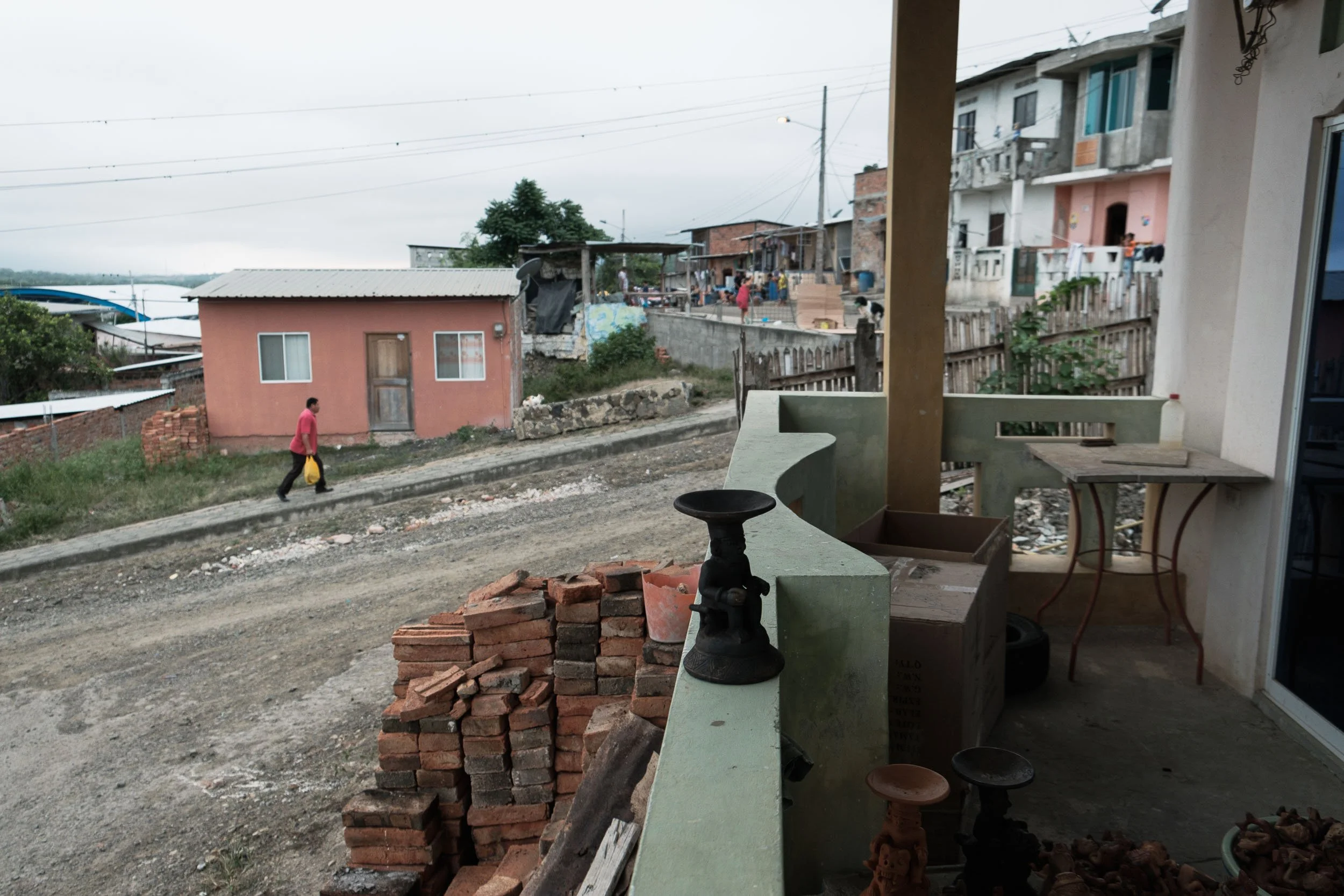

La Pila is a small inland town in the Province of Manabí, Ecuador, famous for its clay sculptures and ceramic production. The territory surrounding the town was once a rich ground of various pre-Colombian cultures that flourished here.
The antiquities discovered in the area brought to light elaborate ceramics expressing symbolism, mythology and social structure. The craftsmen of Pila continue the tradition of ceramic making today by producing fine replicas of antiquity ceramics using ancestral techniques and traditional practices.
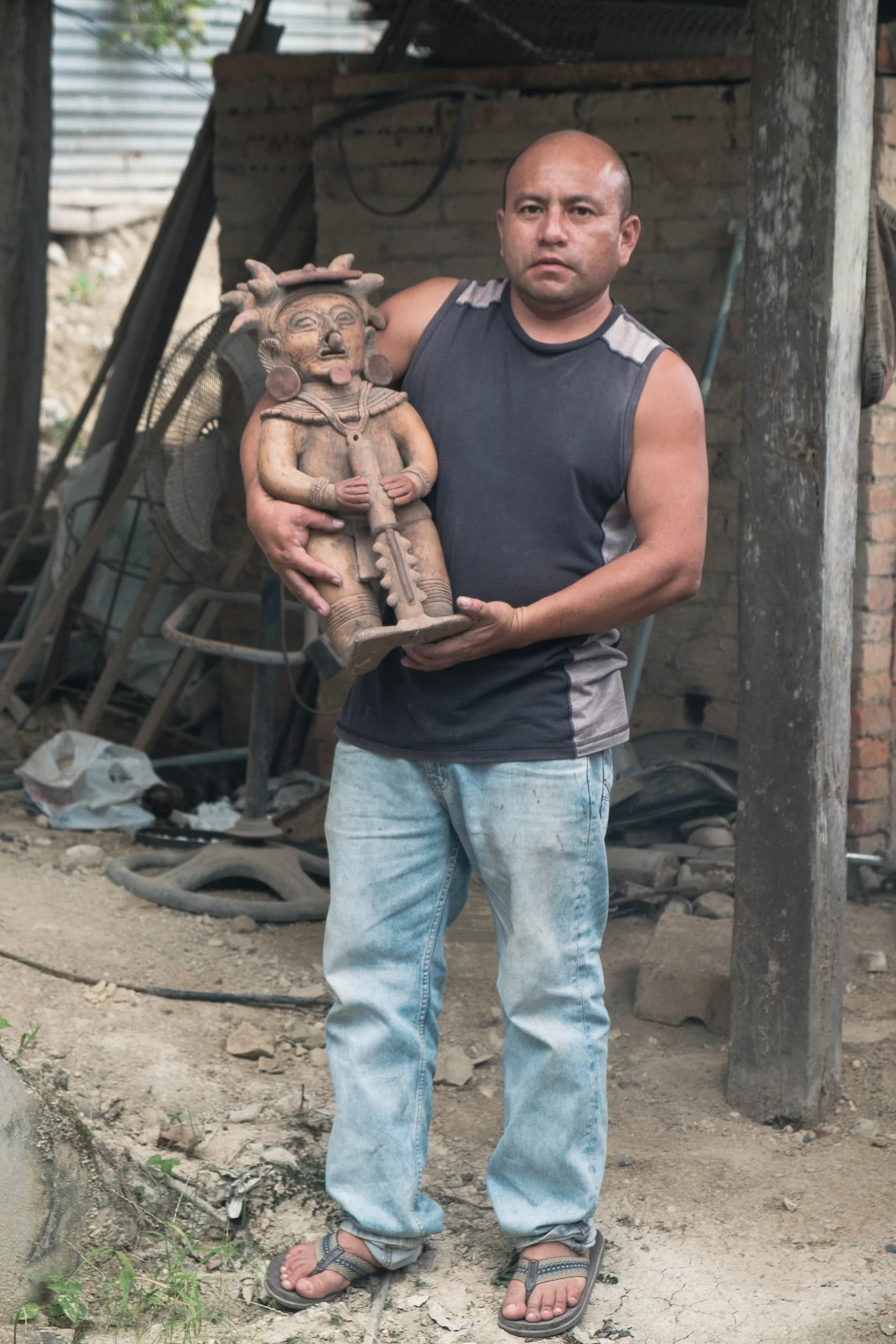

In La Pila, we encountered the work of Ángel Quikige, a master replica maker whose practice is deeply rooted in local tradition and widely recognized. His work is in demand and has been produced in collaboration with museums across Ecuador and Colombia.

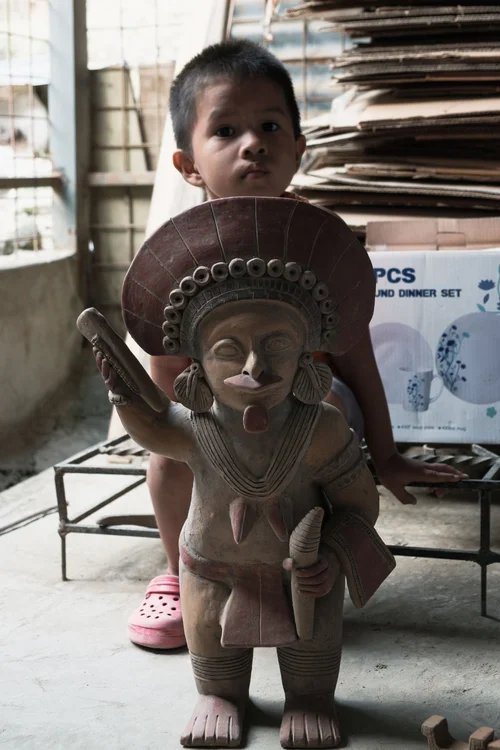
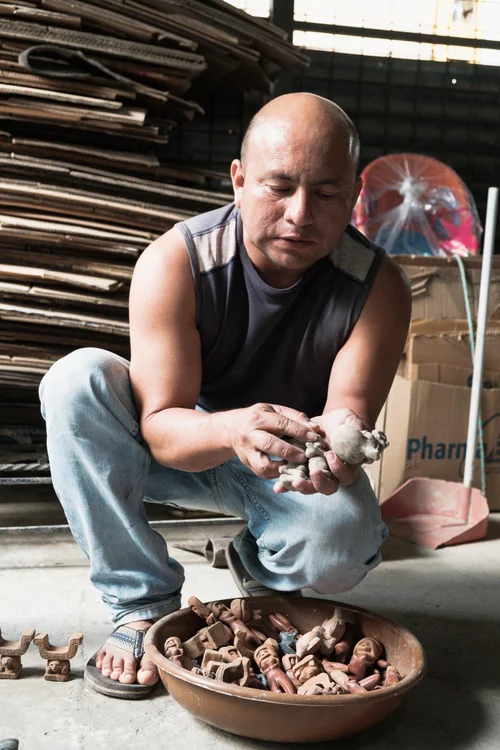
We visited his home and workshop in La Pila, where he explained his process, from collecting clay from nearby deposits to shaping the initial models, making molds, and firing the pieces in an open-fire kiln in his backyard.

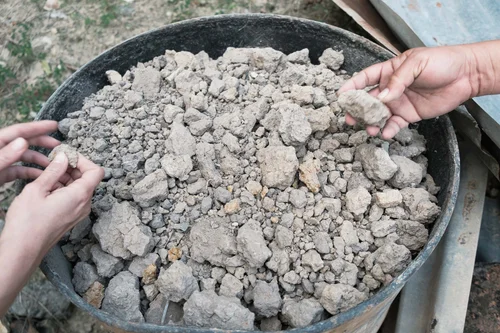
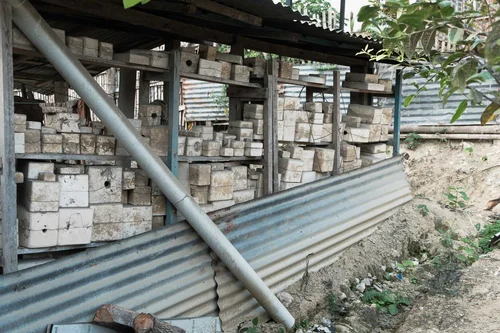
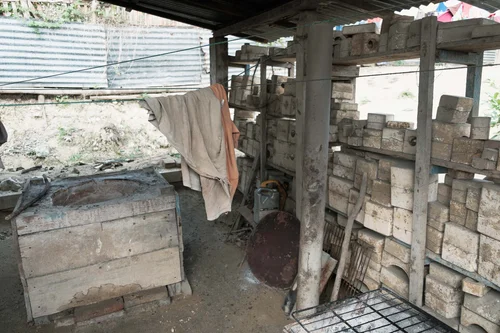
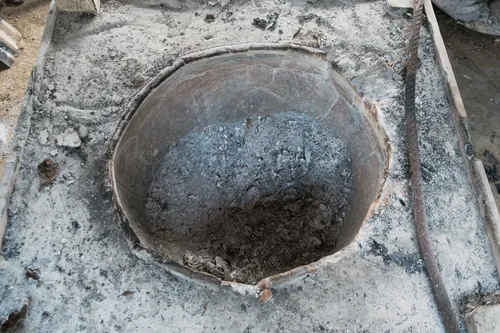
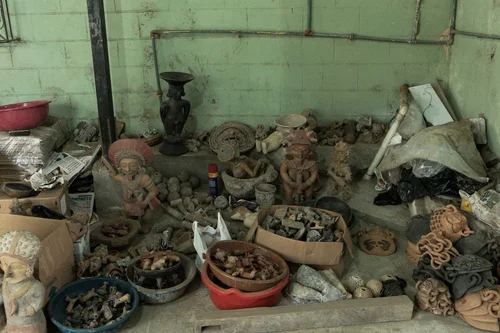
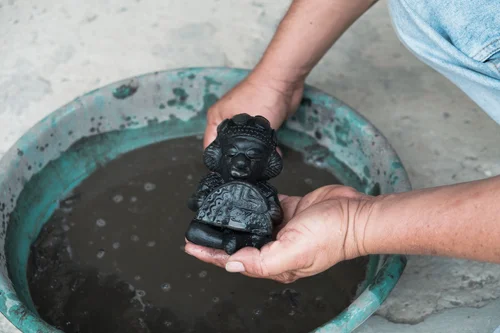
Ángel has been making figurines since childhood, learning the craft from his father. Working with the same materials used by earlier cultures, this lineage developed a precise understanding of form and material.
Chorrera Culture
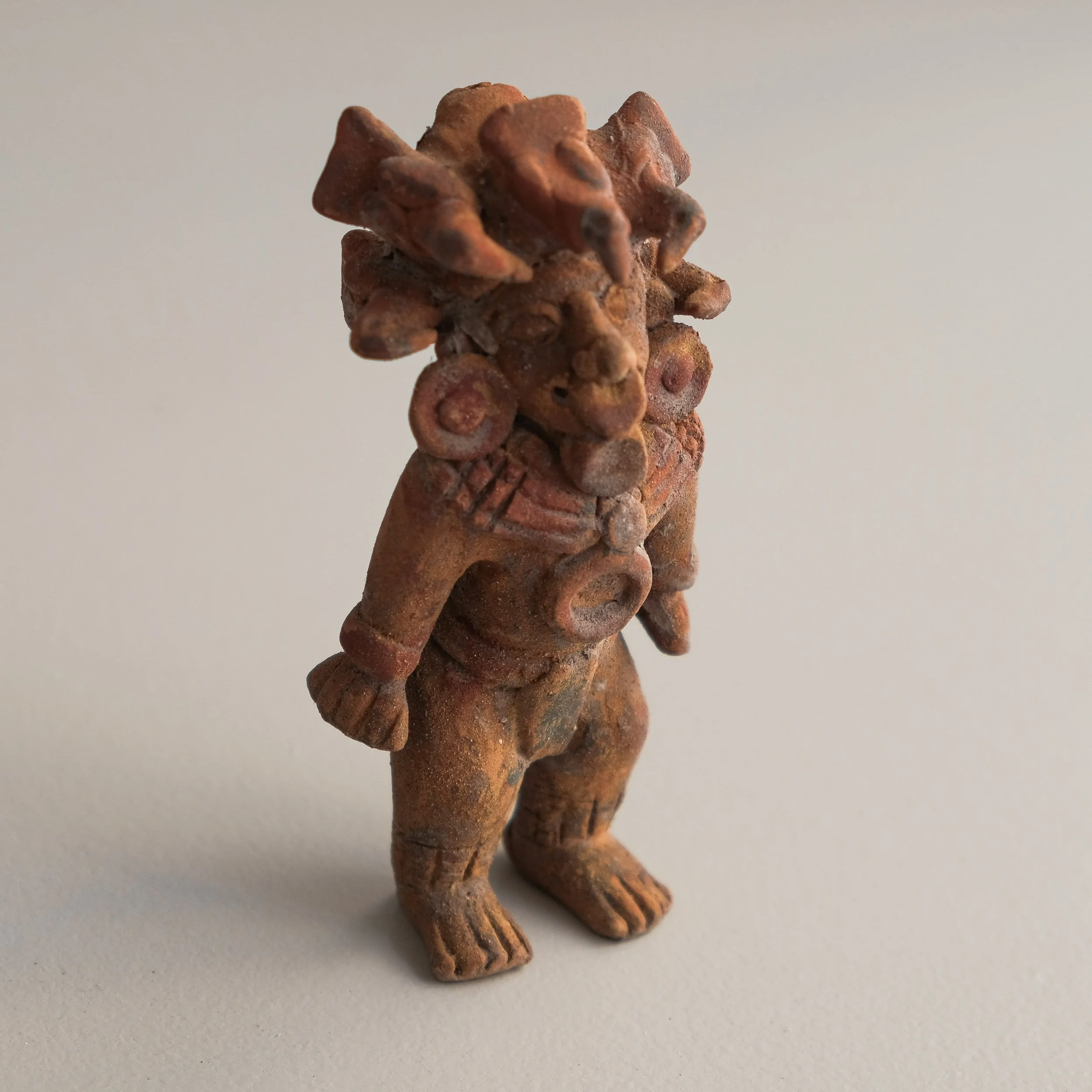
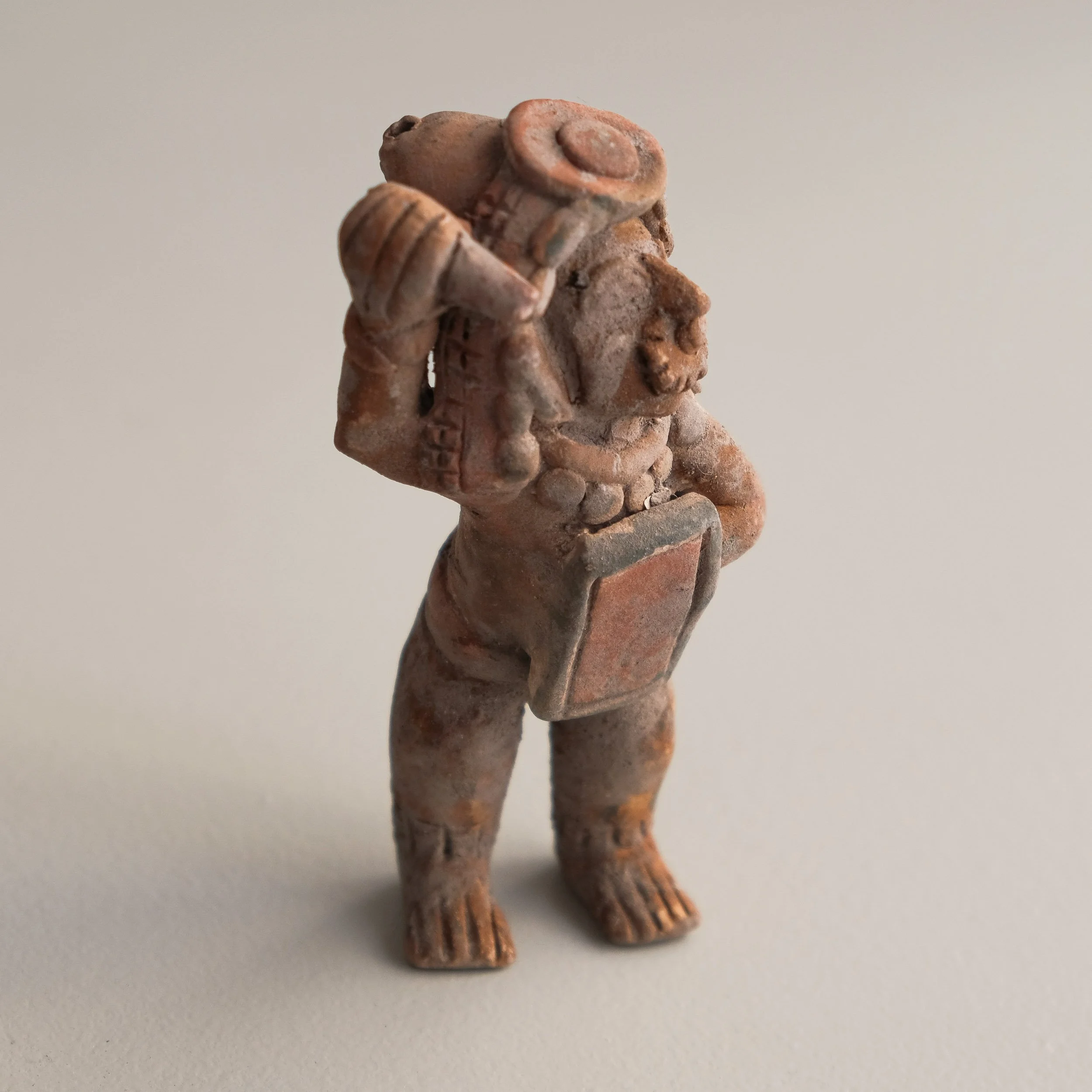
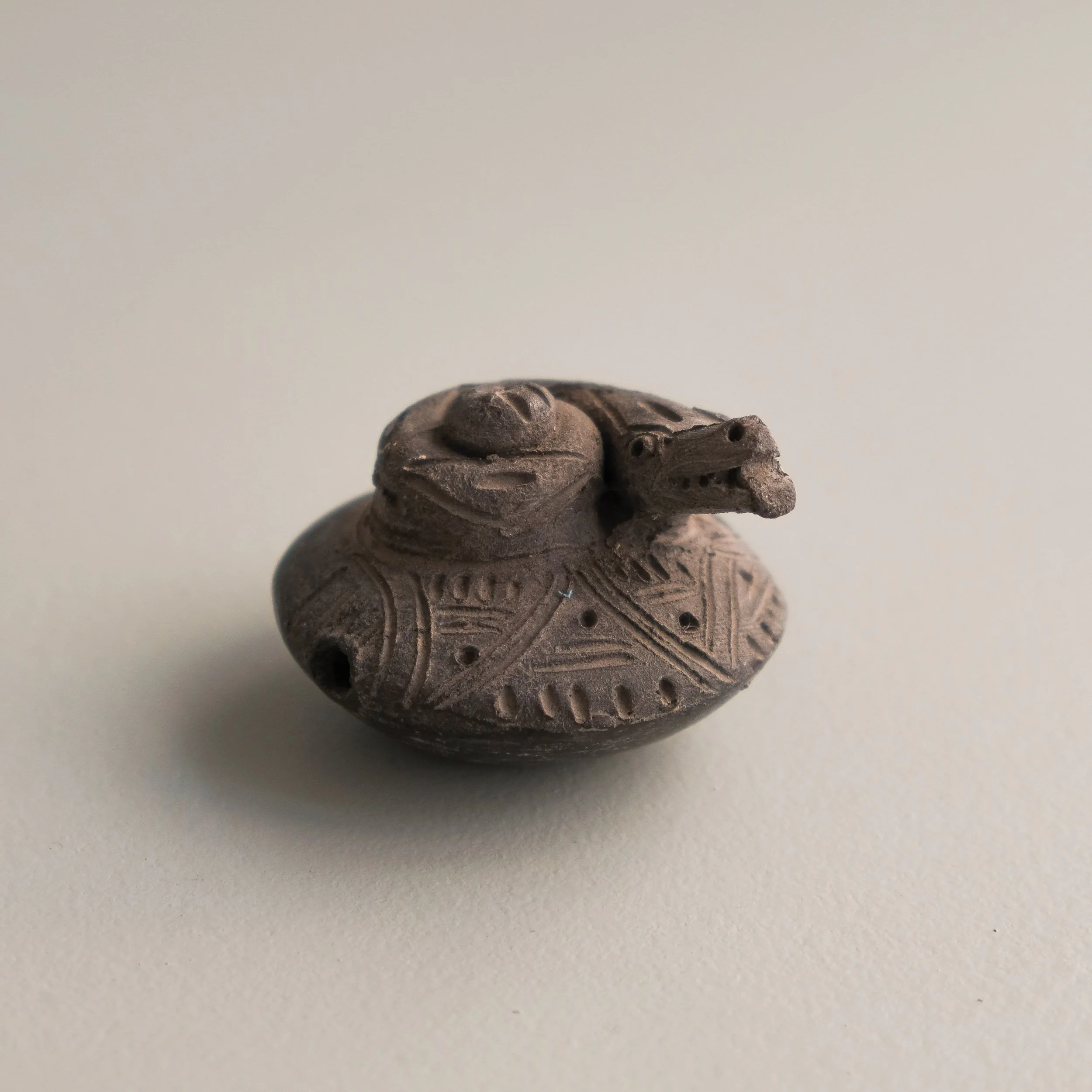
The Chorrera culture inhabited Ecuador between 1000 and 300 BC. The civilisation broadly spread from the coastal regions of the Manabí and Esmeraldas Provinces, reaching up to the Andes and the Amazon territory alongside the Guayas River.The Chorrera produced highly polished ceramics with mirror like appearances. Their artwork exhibits a distinct look of negative painted pieces, asymmetrical decorations, and hollow anthropomorphic figures. They produced the first seals of the region and replaced simple drinking vessels with whistling ceramics. Their objects have realistic representations of animals, plants and humans decorated with colours, dots and incisions. The Chorrera culture descended from the Machalilla civilisation which greatly influenced their creations and production techniques.
Whistling bottle 1000 – 300 BC

Valdivia Culture
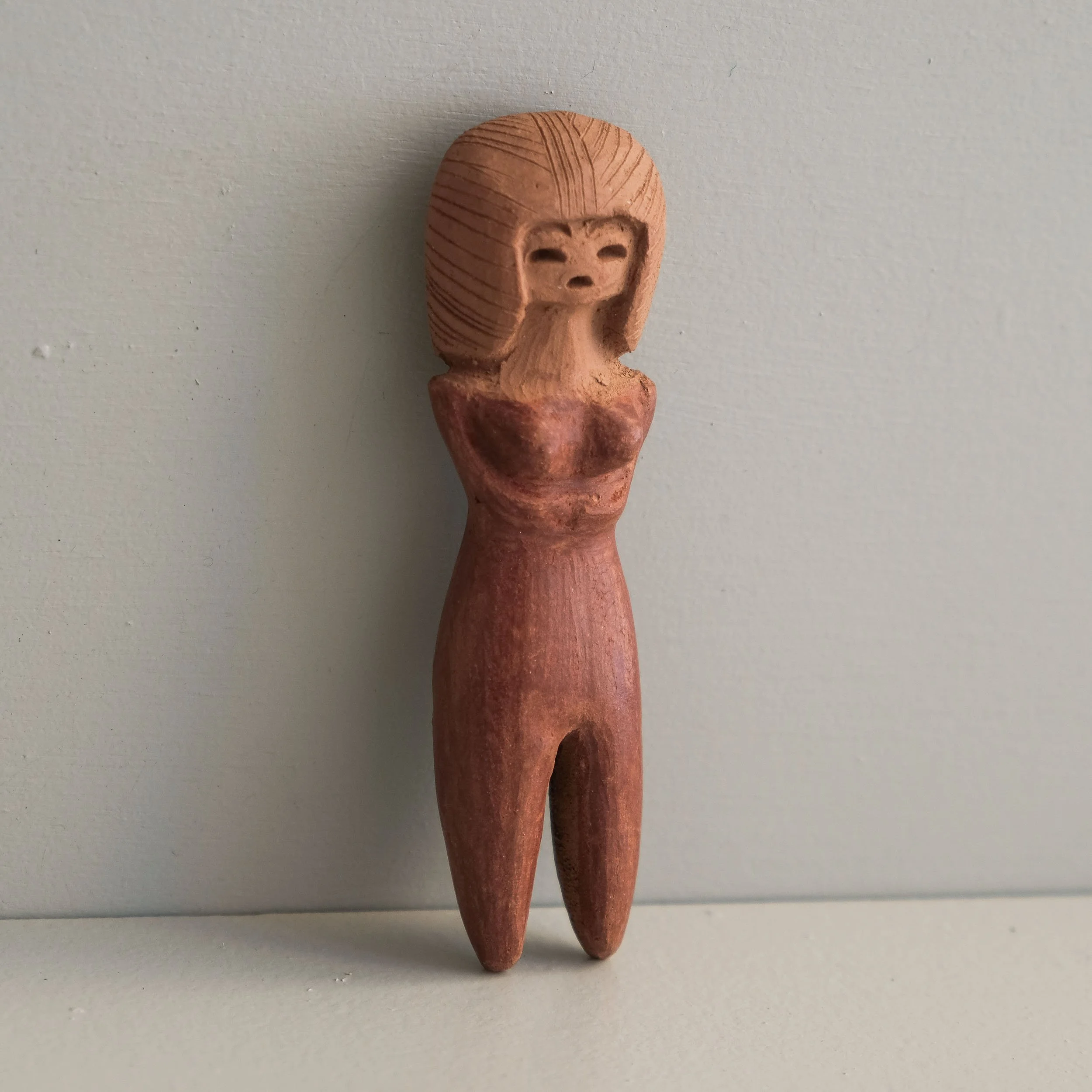
The Valdivia civilization dates back as early as 3500 BC and it’s considered to be one of the first cultures to use pottery in the Americas. The civilization developed in an area located along the southern Ecuadorian coastline of Santa Elena. The Valdivia artwork is known for its female figurines initially made from stone.
Characterised by the exaggerated headdresses framing their faces, the figurines symbolise fertility, womanhood, pregnancy and childbirth as well as indicating a matriarchal-based religion. The Valdivia ceramics present high technical development applied with a variety of techniques such as modelling, embossing and polishing. They are considered objects of remarkable antiquity, marking the beginning of ceramic production in the Americas.
Figures dated between 2600 – 1500 BC
La Tolita Culture
La Tolita developed in northern Ecuador along the coast of Esmeraldas, extending to southern Colombia in the region of Tumaco. The culture flourished between 600 BC and 200 AD with artefacts revealing a hierarchical society with complex beliefs and a highly artistic nature.
Their ceramics are finely crafted using grey and golden coloured clay to produce statues of mythical beings, incense burners, cups and yuca graters. La Tolita is also characterised by its large vessels that resemble artefacts from Mesoamerica which perhaps indicate the civilization's origin.
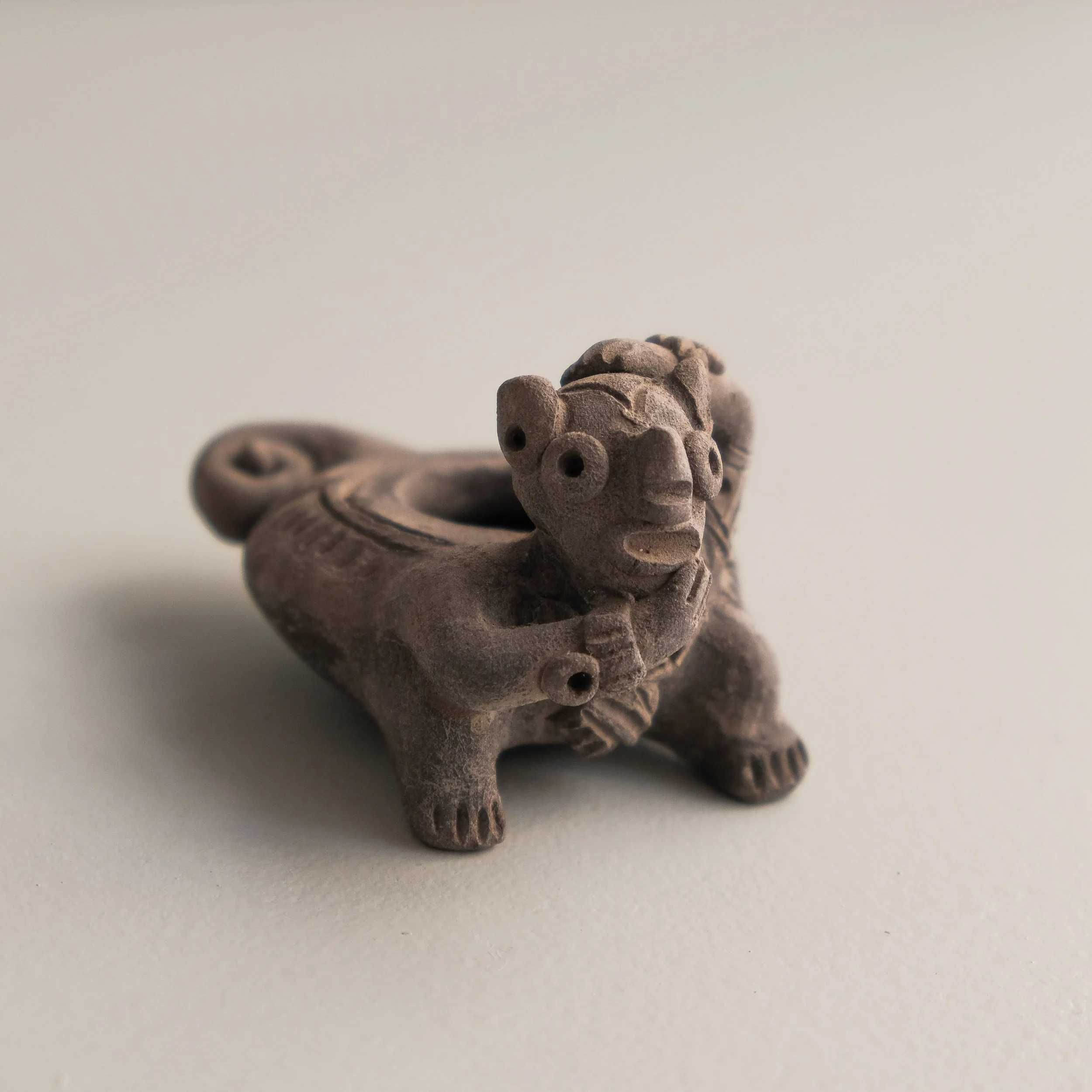
Anthropomorphic figures 500 BC – 500 AD
Jama Coaque Culture
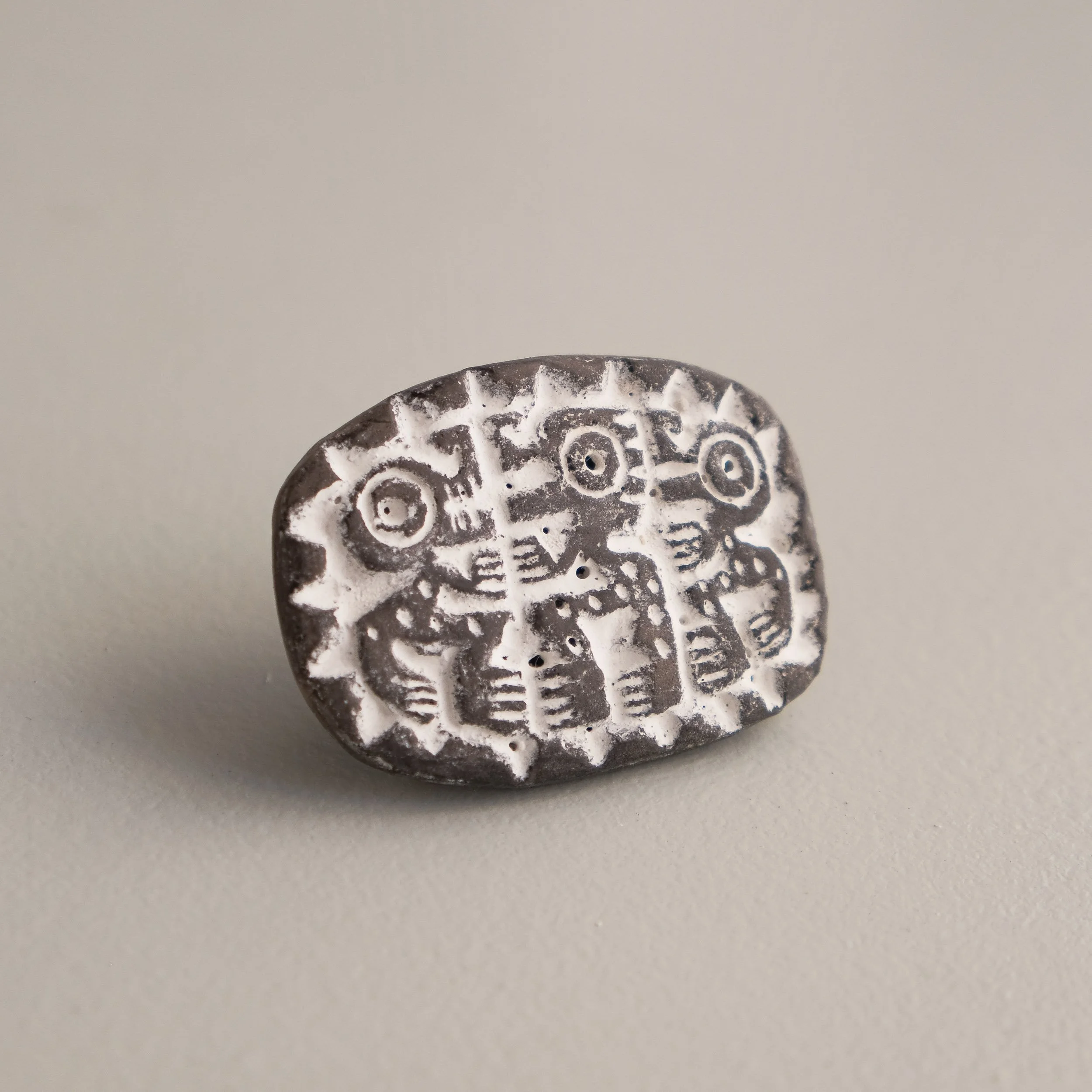
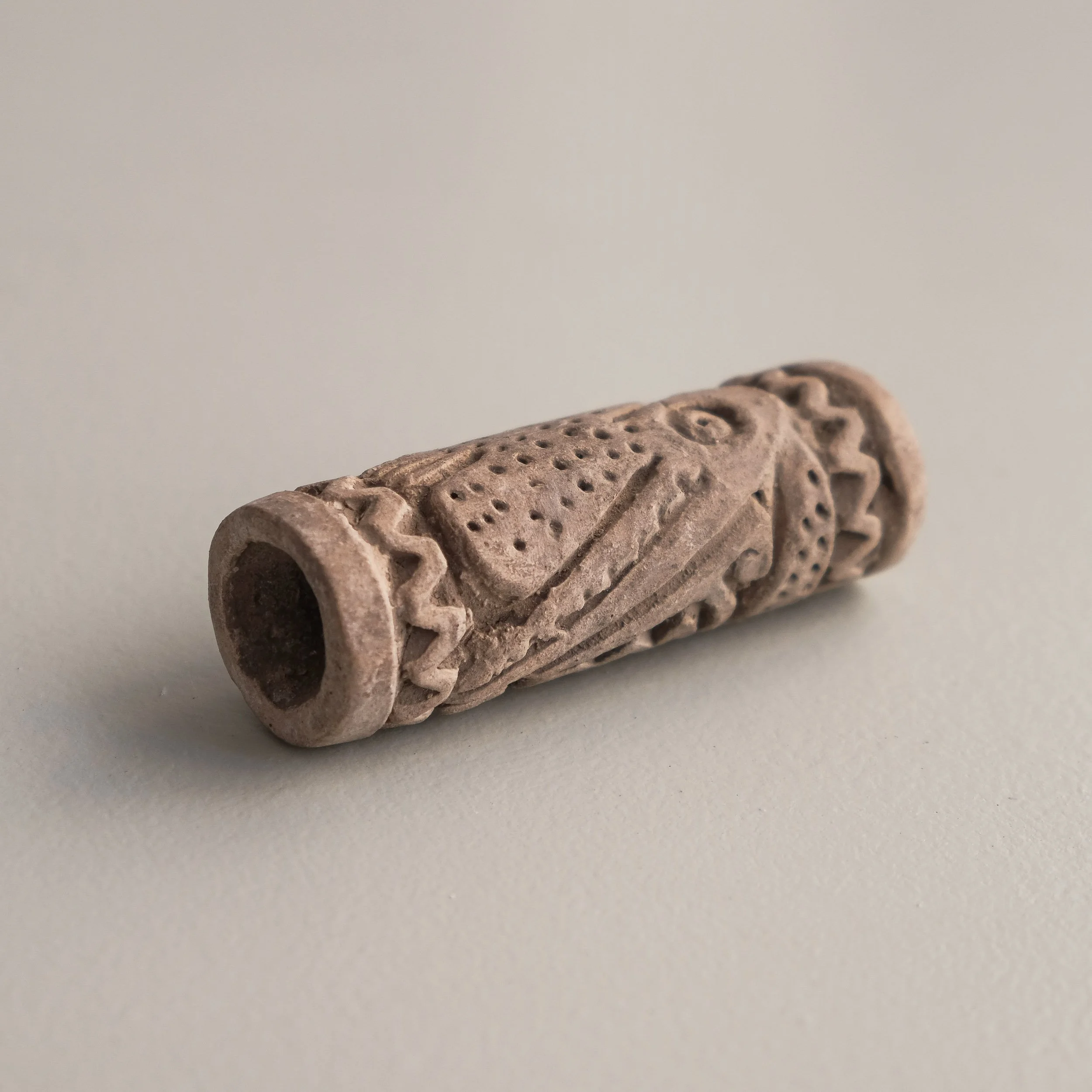
The Jama Coaque culture lived along the Pacific coast of Ecuador in the province of Manta between 600 BC and 400 AD. Their most notable pieces are the miniature statues presenting body ornaments and clothing, clearly representing complex societies and culture.
The most common ceramics made by this civilisation, are stamps used to paint their bodies and print onto artefacts. The Jama Coaque can be traced back to the Chorrera people with certain artistic features influenced by the Mesoamerican traditions
Circular Stamp 500 BC – 500 AD
Cylindrical Stamp 500 BC – 500 AD
Manteña Culture
The Manteña Culture extended along the Gulf of Guayaquil to northern coastal Ecuador between 600 AD – 1600 AD It is considered to be one of the last pre-Colombian civilisations of Ecuador, famous for using spondylus and other shells as a type of currency.
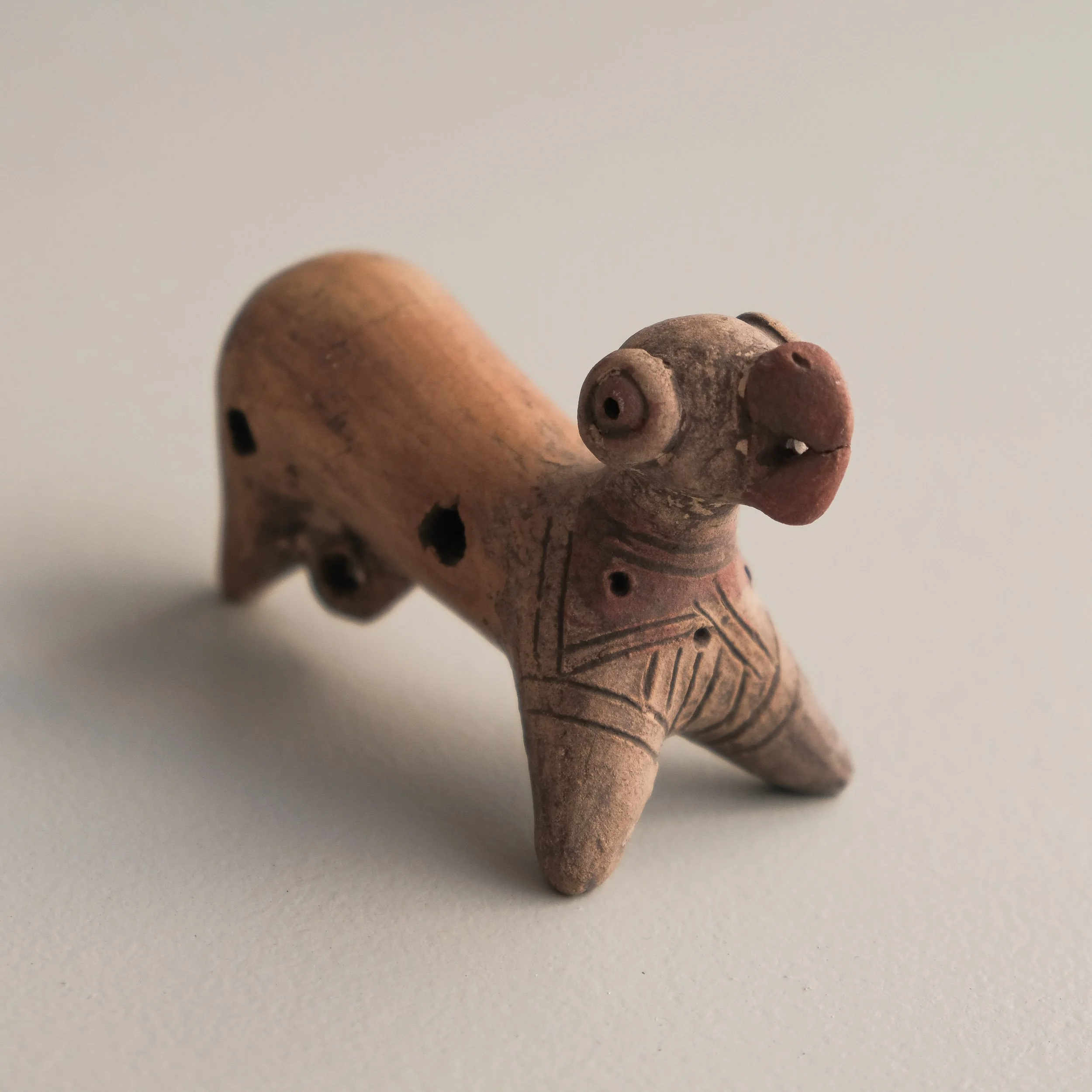
Their ceramics were moulded by hand using clay appliqué techniques to produce heavily decorated creatures and forms. Around 500 AD smaller communities began to unite into larger groups, forming semi-urban environments along the coast.
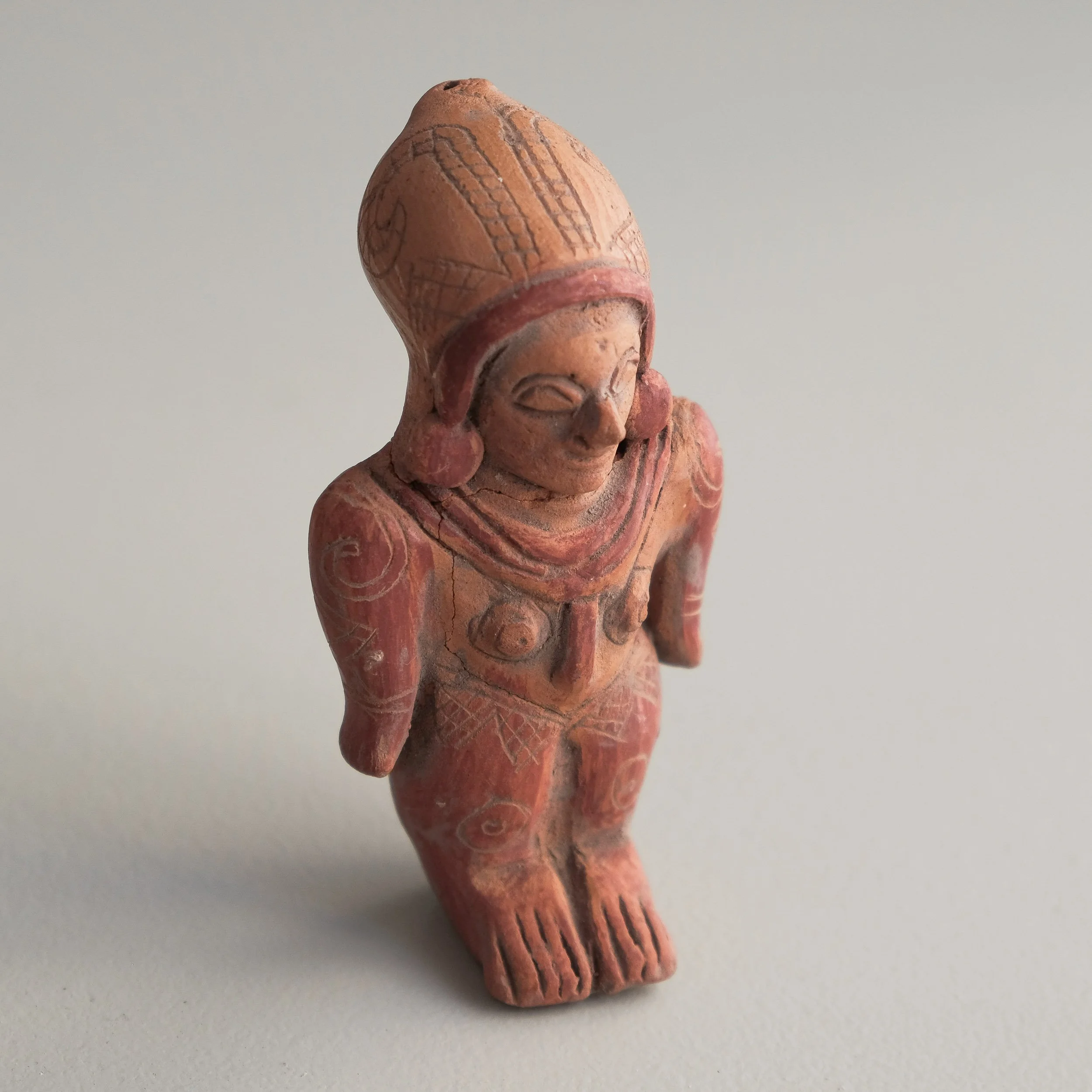
Male figurine 800 AD – 1500 AD