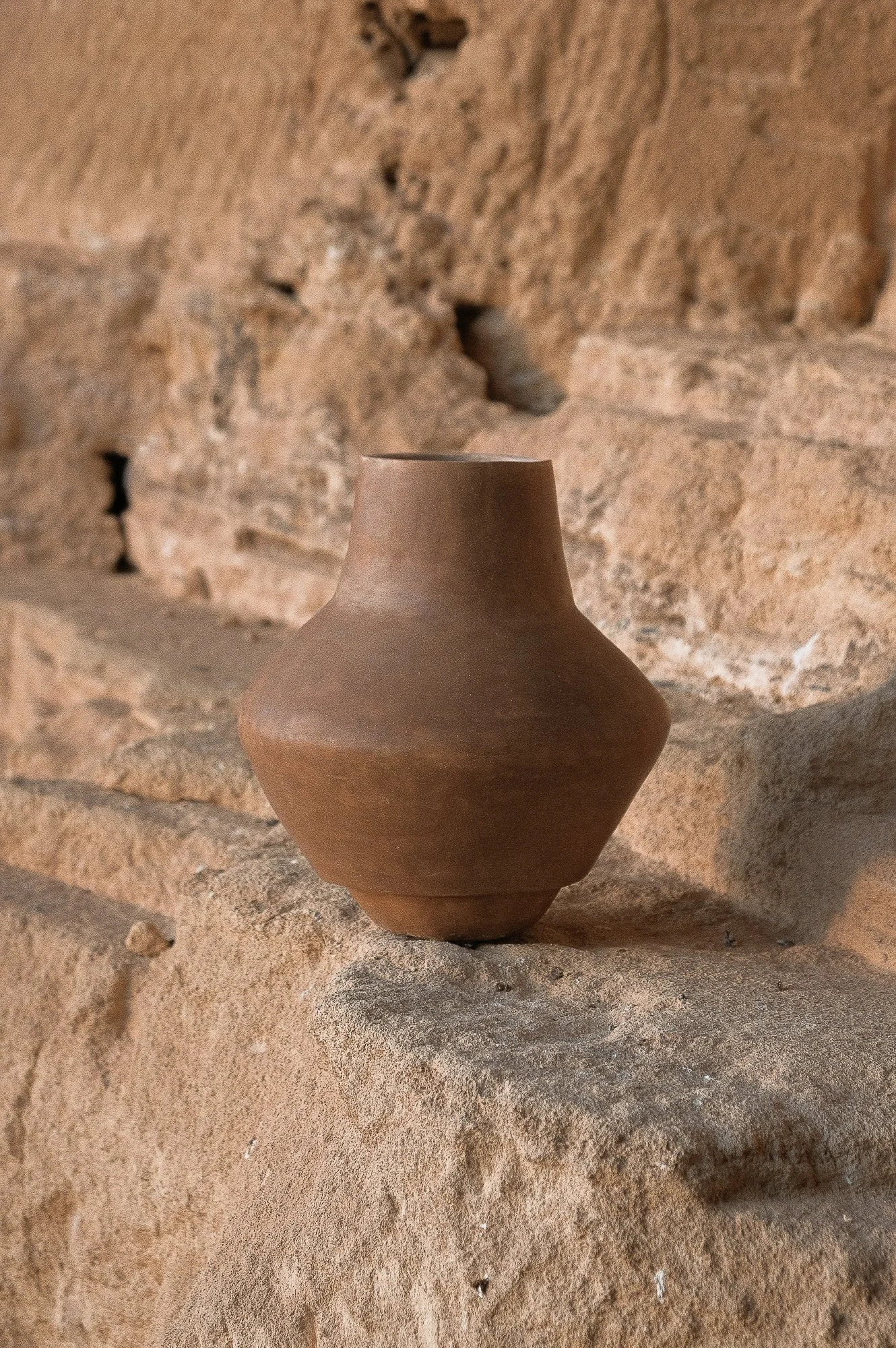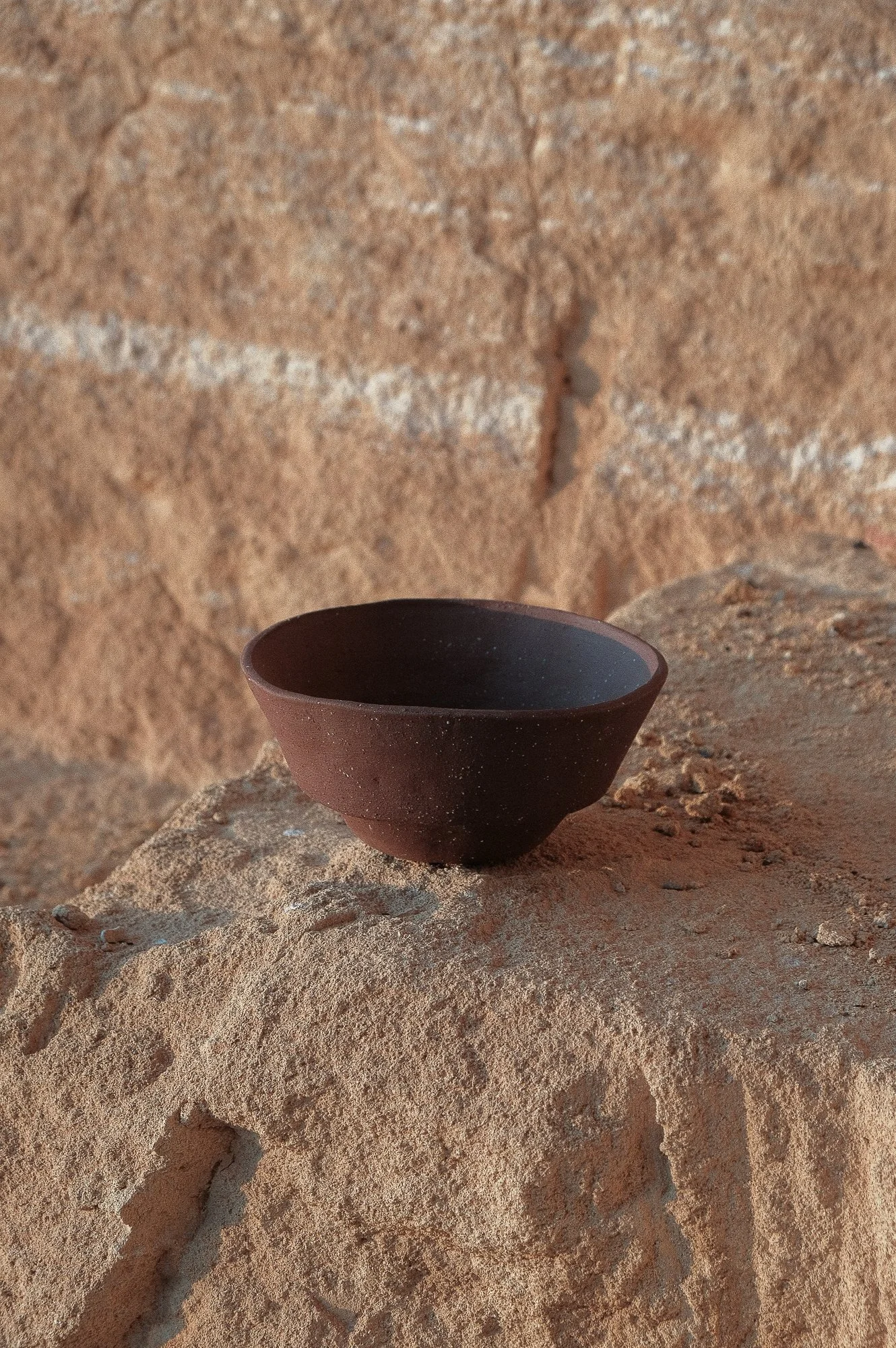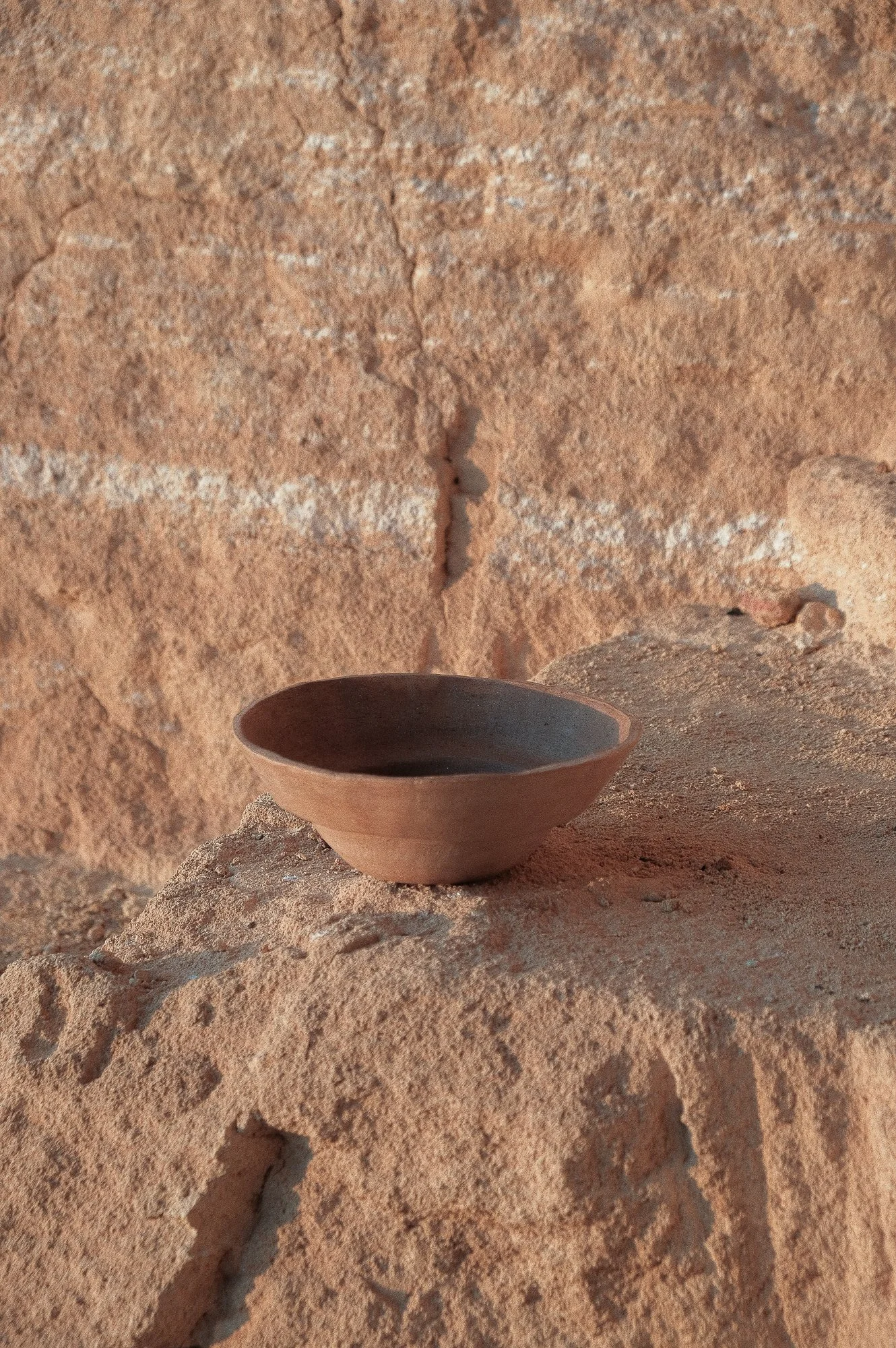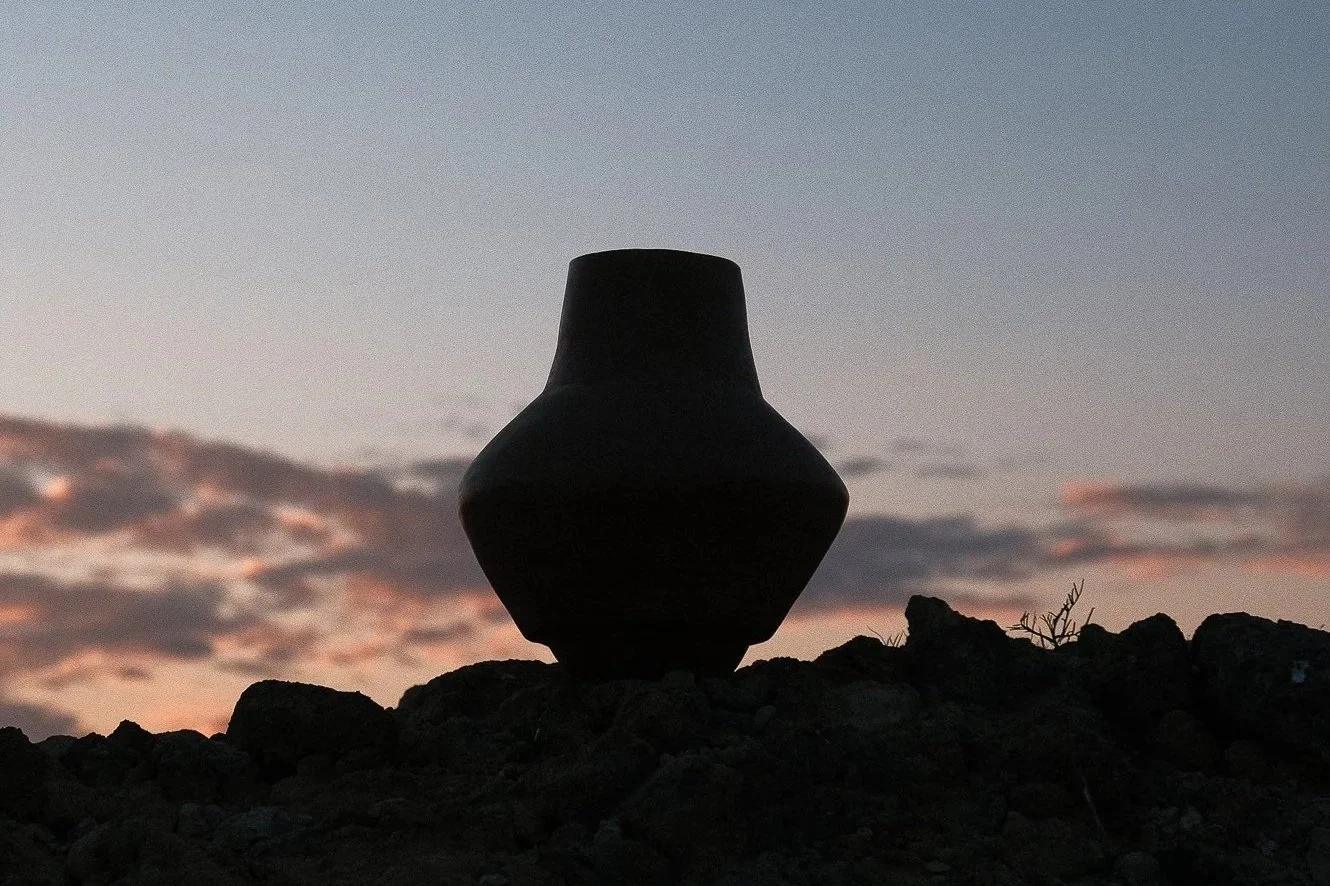
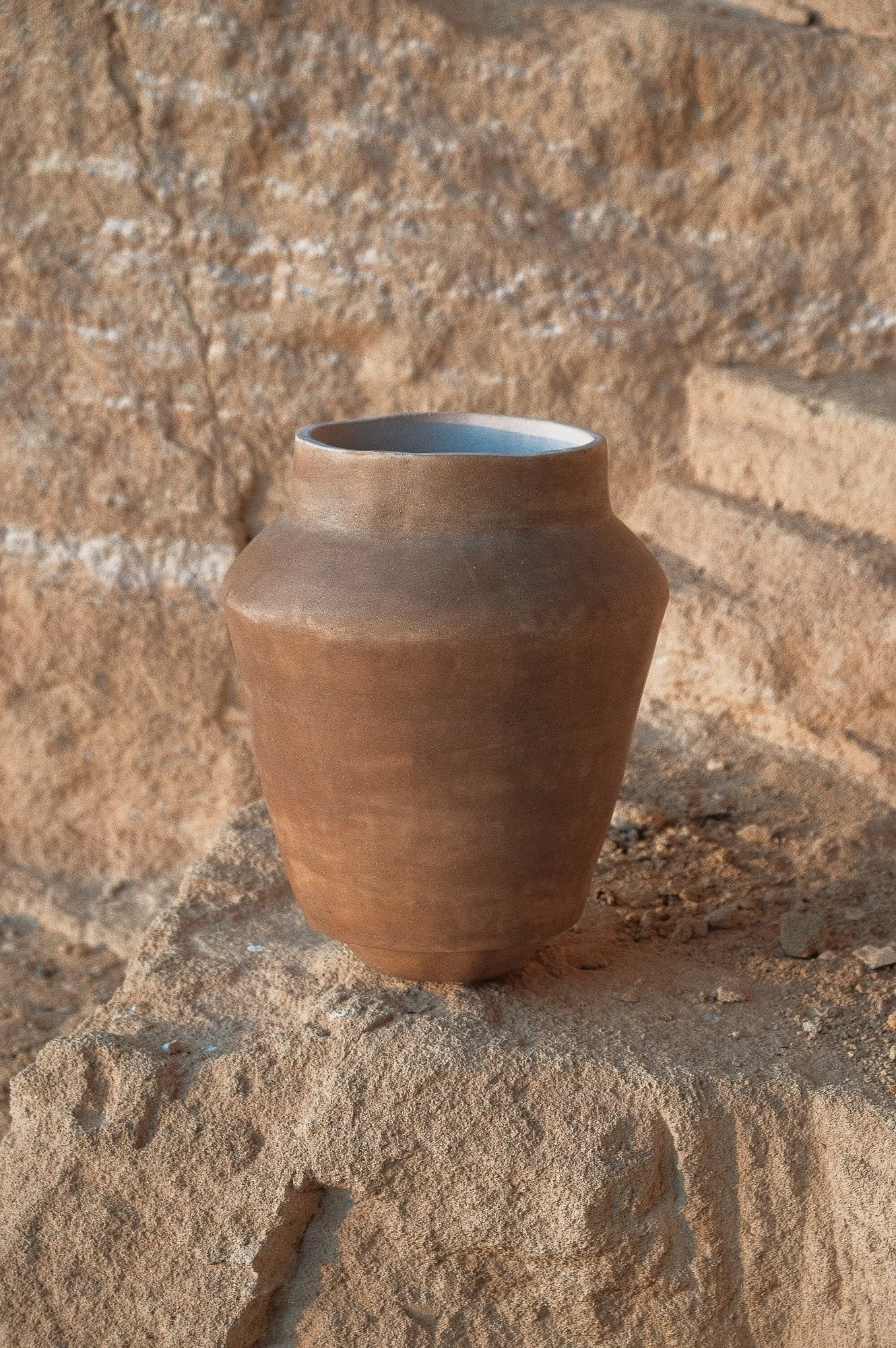
This collection centres on the natural porosity of wild clay, approaching it as an active quality rather than a limitation. New forms were developed to work with this openness, allowing the material to absorb, breathe, and respond to use. The shapes are designed to support these characteristics, keeping the structure of the clay present and readable.
After firing, the pieces are treated with natural beeswax, applied while the clay is still warm so it can penetrate the surface. This method improves water resistance while maintaining the clay’s tactile quality and visual depth. The wax settles into the surface rather than sitting on top of it, enriching the colour and revealing subtle variations in the material.
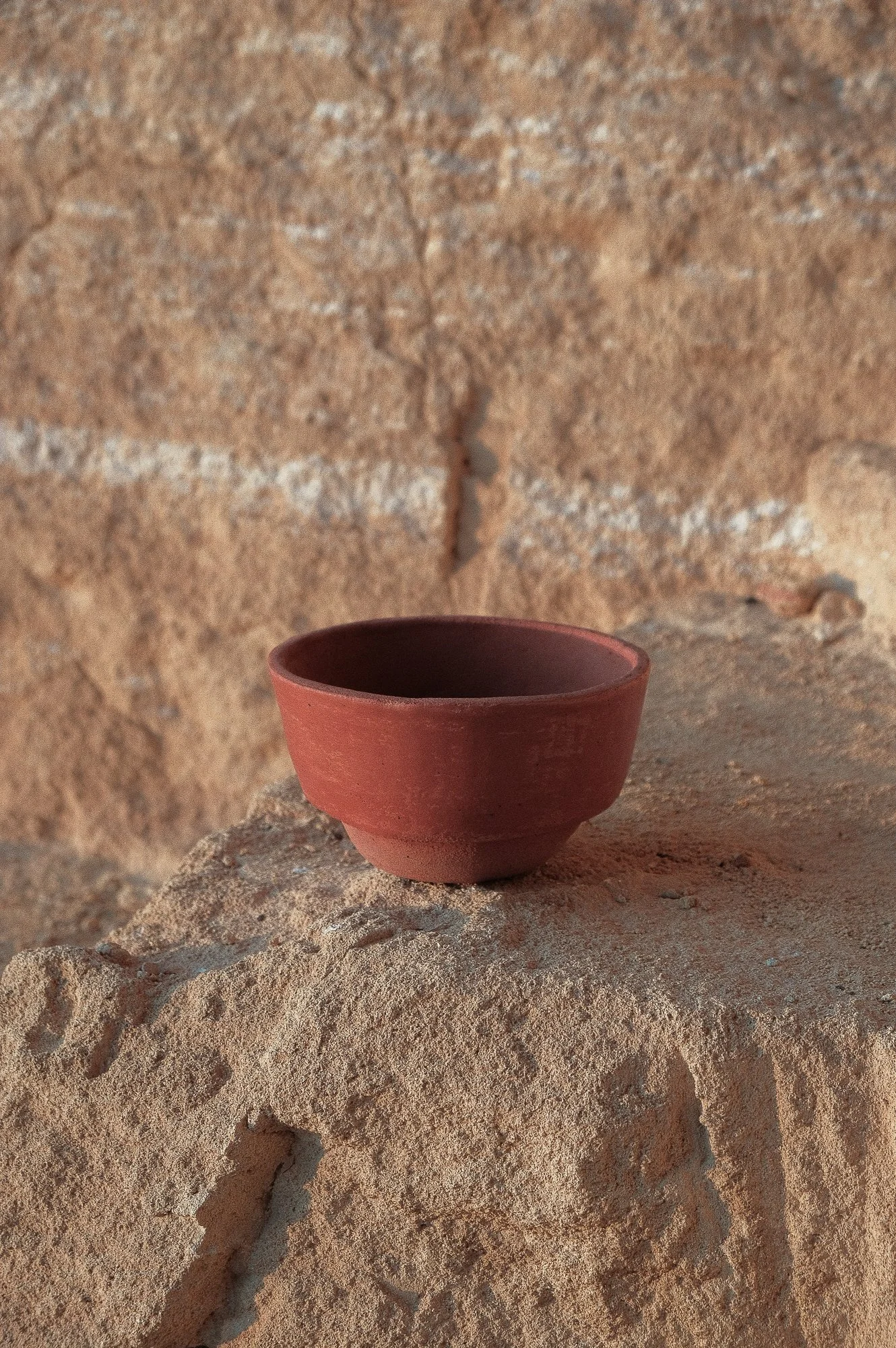
This process offers an alternative to conventional glazing. Instead of applying a separate, glass-like layer, the surface treatment works in continuity with the clay body itself. The result is a finish that remains breathable and closely tied to the material’s natural behaviour.
The use of locally sourced beeswax and low-energy processes reflects a wider interest in working with minimal intervention. Compared to traditional glazes, this approach requires fewer resources and lower firing demands, while remaining functional and durable. The collection brings together material experimentation, sustainability, and form, highlighting how simple, natural treatments can extend the possibilities of wild clay without distancing it from its origin.