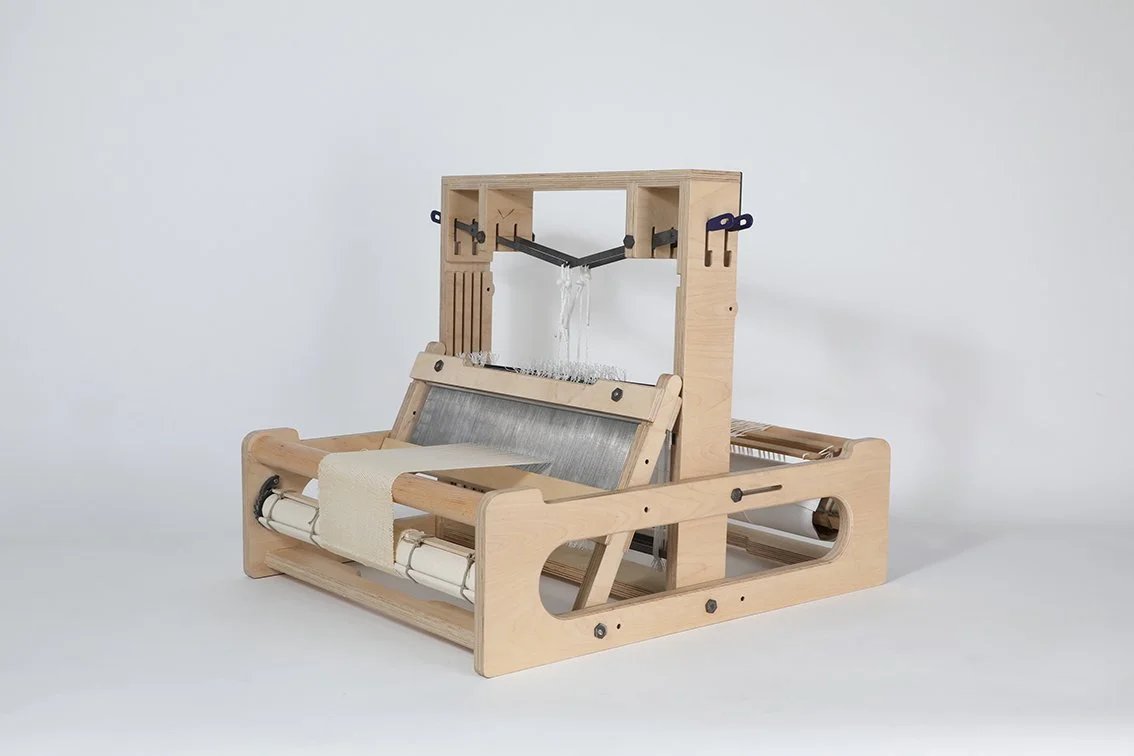
Threading Stories Studio presents the FL Project, introducing a functional prototype of a foldable loom with the goal of creating an educational design-and-make tool that preserves and promotes cultural heritage and traditional craft practices. This initiative aims to safeguard and advance a traditional craft by introducing an innovative and accessible educational design tool. One of the central objectives of this project is to showcase a product that harmoniously combines technology and heritage craft, demonstrating the positive influence of technology on the preservation of craft heritage. Presented at Bauhaus University Weimar and funded by the Research and Innovation Foundation.
The project was divided into three key stages of research and development, working with interactive prototyping.
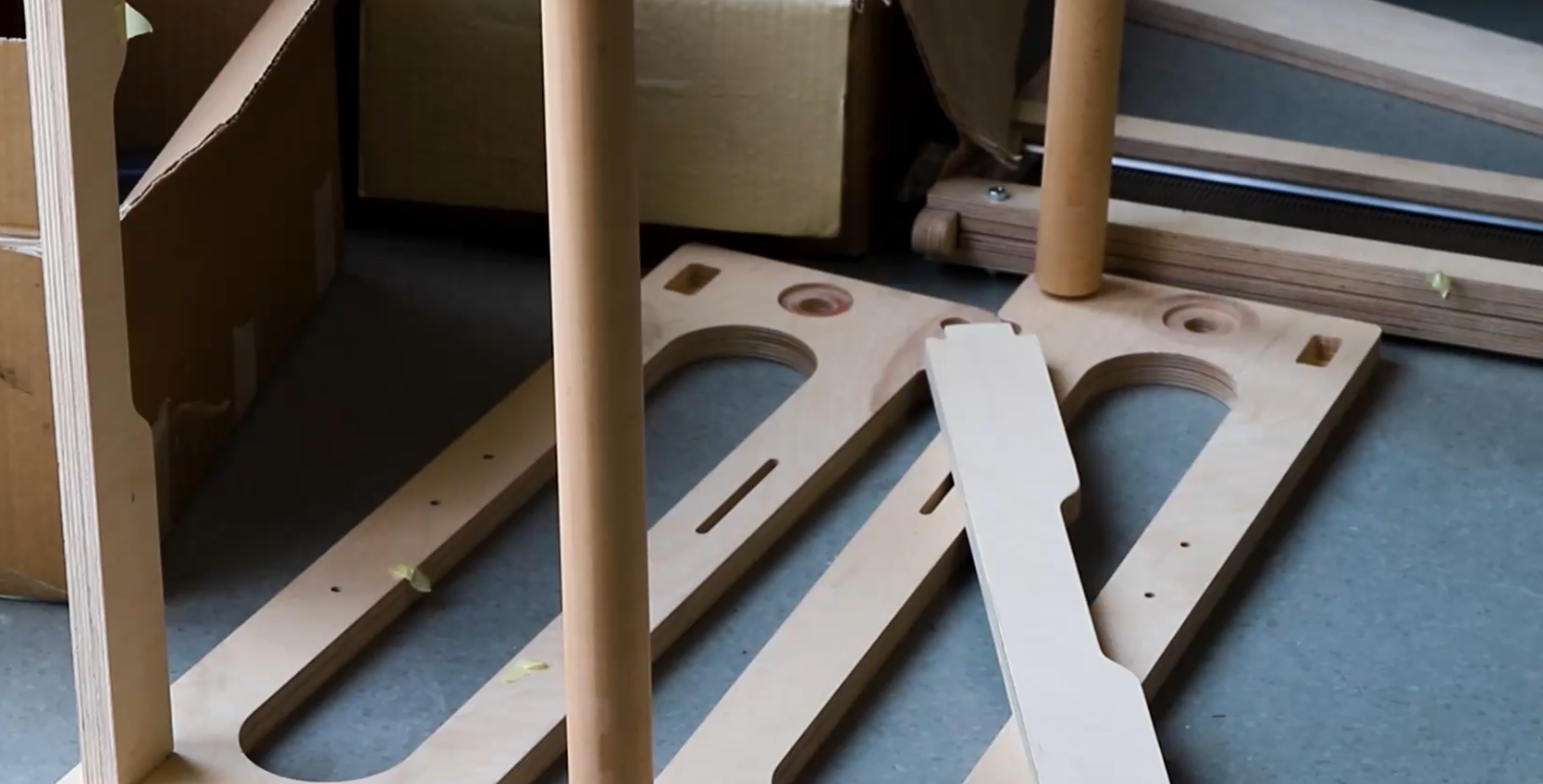
The initial phase centred on the creation and construction of a model using 3D software. The model established the design framework and optimised the manufacturing process, therefore minimising waste, reducing costs, and streamlining timelines. Following on, the project transitioned into the testing and evaluation phase, wherein the prototype was assembled and thoroughly examined for usability and functionality. Finally, the work underwent meticulous revision and refinement before proceeding to the final manufacturing stage for the production of a series of functional prototypes. The production of the foldable loom required numerous skill sets from 3D design to textile manufacturing. The prototypes were developed in makerspaces, fabrication labs and textile studios with the final assembly taking place in wood workshops.
The entire process presents the complexity of designing a refined product that uses local infrastructure and combines processes and expertise In the following slide I listed some of the materials, tools and expertise that were required to produce this prototype to emphasise the process for designing and making such a tool that can have an impact for professional weavers of all levels.
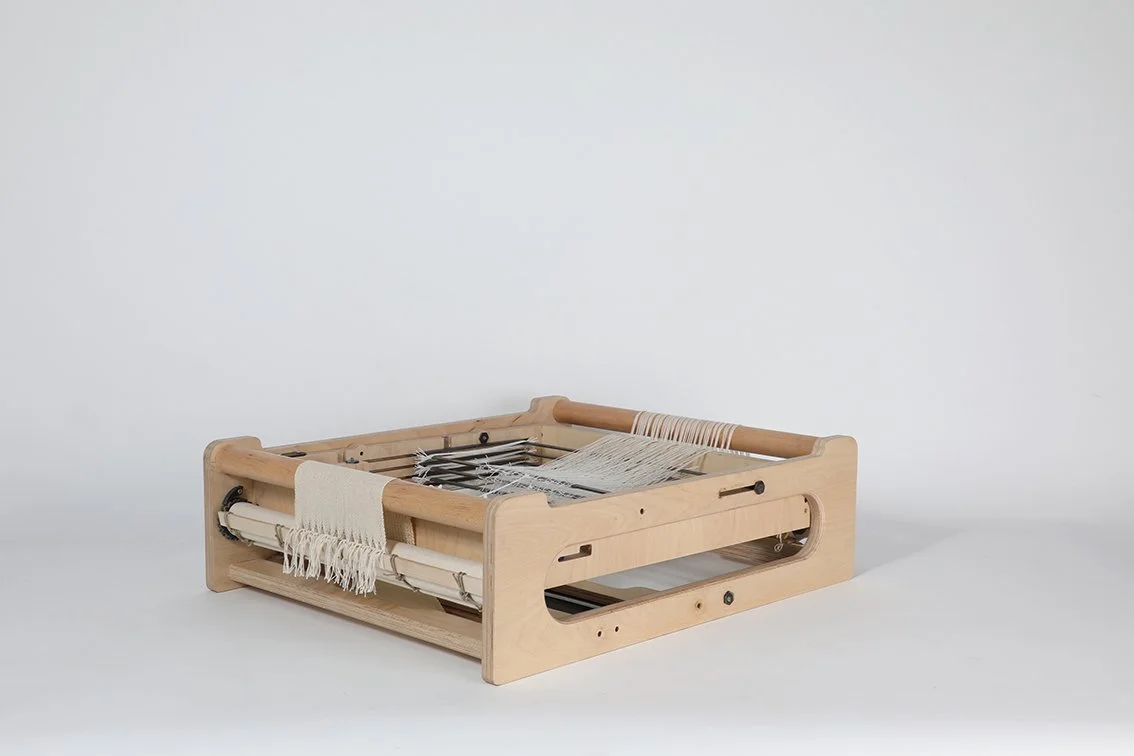
The Foldable Loom project has resulted in the creation of an educational design tool that both promotes and preserves cultural heritage and traditional craft practices. This product is tailored for use in arts education, with the dual aim of nurturing traditional craftsmanship and providing a versatile tool for designer-makers, students, and industry professionals. Our objective was to develop an easily accessible product suitable for operation in diverse settings such as workshops, design studios, and educational institutions. The final product showcases the application of various digital fabrication technologies and highlights the potential for small-scale production runs. Ultimately, the project sought to demonstrate a successful amalgamation of innovation and tradition, emphasising the significance of interdisciplinary knowledge exchange.